Automation Careers for Mechanical Trades: How to Build the Skills Employers Need
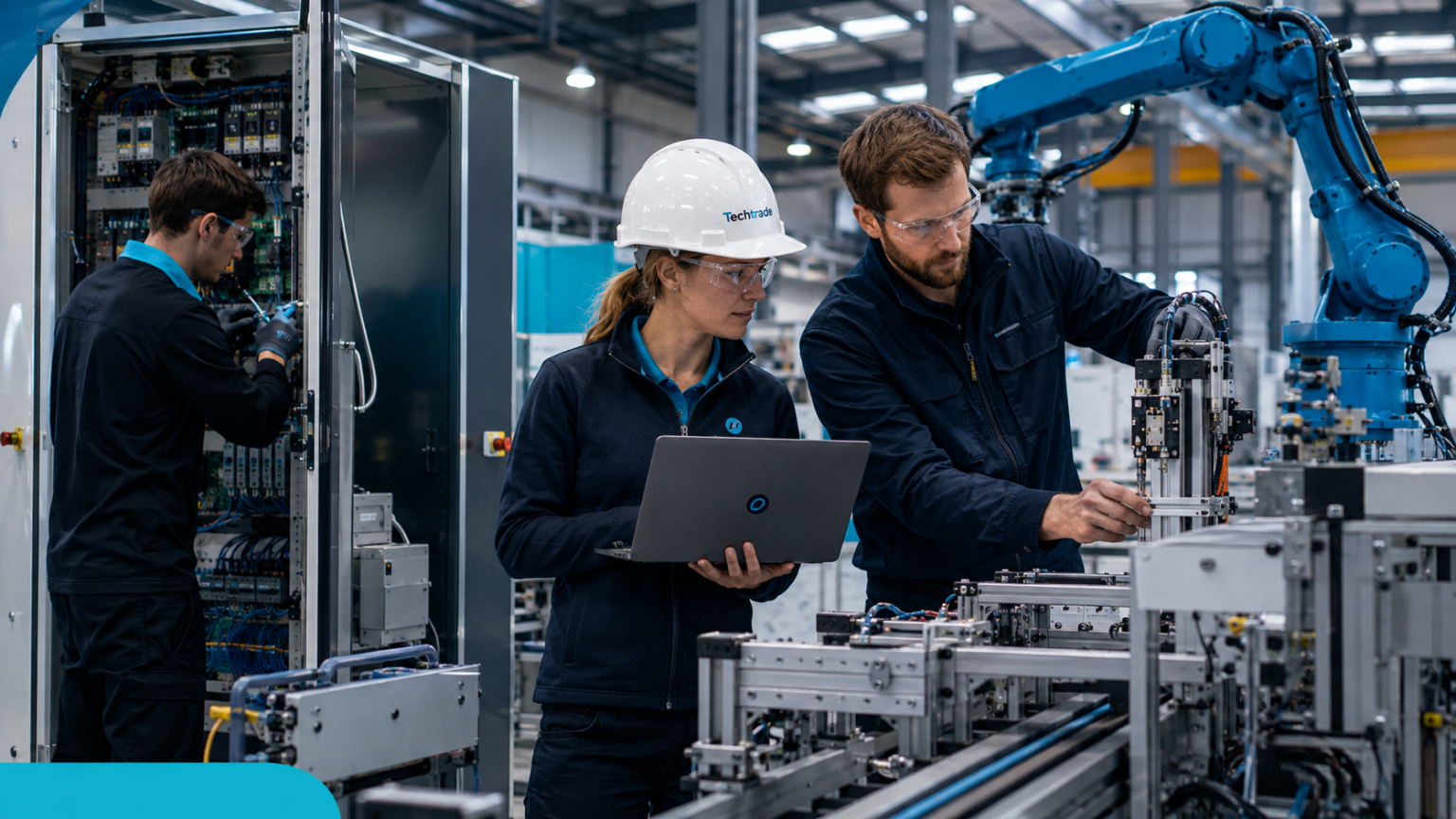
Automation is creating new career opportunities across manufacturing, food processing, logistics, agriculture, utilities and engineering.
For mechanical fitters, maintenance fitters, machine builders, fitter-turners and other mechanical tradespeople, moving into automation may be more achievable than it first appears.
Automated systems still rely on familiar mechanical equipment. Conveyors, bearings, shafts, couplings, gearboxes, motors, pneumatics, hydraulics, guarding and production machinery all need to be assembled, aligned, maintained and repaired.
Businesses need people who understand how this equipment performs in real production environments, can identify faults safely and can work effectively alongside electrical and controls specialists.
You do not need to become a software engineer or robotics programmer to build a career in automation. A strong mechanical foundation, combined with experience around automated equipment, can lead to opportunities in machine building, automation maintenance, installation, service and commissioning.
What automation means for mechanical trades
Industrial automation includes much more than robotic arms.
Common applications include:
- Automated production and packaging lines
- Conveyors and materials-handling systems
- CNC machine tending
- Robotic welding
- Palletising and depalletising
- Automated food-processing machinery
- Machine vision and quality inspection
- Automated guided vehicles and mobile robots
- Sensors, guarding and machine-safety systems
Every automated system has mechanical components that must operate correctly.
Even advanced machinery will stop if a bearing fails, a conveyor tracks incorrectly, a pneumatic cylinder leaks or tooling moves out of alignment.
This is where skilled mechanical tradespeople provide real value.
Start with strong mechanical foundations
Automation adds another layer to mechanical trade skills. It does not replace them.
Employers are more likely to consider you for automation-related work when you can demonstrate sound experience in areas such as:
- Machinery assembly and installation
- Conveyor installation, tracking and alignment
- Bearings, shafts, couplings and belt drives
- Motors, gearboxes and drive systems
- Pneumatics and hydraulics
- Pumps and production equipment
- Reading mechanical drawings
- Precision measurement and alignment
- Fabrication and mechanical modifications
- Planned and preventative maintenance
- Breakdown fault-finding
- Shutdown work
Maintenance fitters often have a useful foundation because they regularly diagnose faults while production is under pressure.
Machine builders also bring valuable experience because they understand how individual components, frames, drives, tooling and guarding come together as a complete operating system.
How to develop your automation capability
1. Gain exposure to automated machinery
Look for work involving production lines, packaging equipment, conveyors, CNC machinery, robotic cells or purpose-built machines.
You do not need to programme the equipment to begin learning from it. Start by understanding how the complete process operates.
Consider:
- What starts and stops the machine?
- What sequence does the equipment follow?
- Which sensors confirm each movement?
- What happens when a product is incorrectly positioned?
- How are faults shown on the HMI?
- How do guarding and interlocks affect operation?
- Which mechanical components fail most often?
Understanding the operating sequence can make you a better fault-finder. It also helps you communicate clearly with electricians, automation engineers and production teams.
2. Strengthen your fault-finding process
Automation environments need people who can identify the cause of a problem rather than repeatedly resetting equipment.
A useful process may include:
- Confirming the fault or production issue
- Making the equipment safe
- Reviewing alarms and operator information
- Checking the mechanical condition
- Testing likely causes
- Completing or supporting the repair
- Recording the fault and corrective action
Relevant examples might include:
- Diagnosing recurring conveyor tracking problems
- Finding worn bearings, belts or couplings
- Identifying pneumatic leaks or failed cylinders
- Checking tooling, alignment and product positioning
- Investigating jams and production stoppages
- Working with an electrician to check sensors or drives
- Recording completed repairs in a maintenance system
Keep a record of the faults you have diagnosed and the actions you took. These examples can strengthen both your CV and your answers during an interview.
3. Learn basic electrical and controls concepts
Mechanical tradespeople must not complete electrical work they are not qualified or authorised to perform.
However, understanding the basic language of automated equipment can help you investigate faults and work more effectively with other trades.
Useful areas to understand include:
- Sensors, switches and actuators
- Motors and variable-speed drives
- PLC-controlled machinery
- HMIs, alarms and machine-status displays
- Safety circuits and interlocks
- Inputs, outputs and operating sequences
- Basic industrial network concepts
Practical exposure can be just as useful as formal training when you can explain what you learned and how you applied it.
For example, you may have used an HMI to identify which part of a machine sequence had stopped, then completed mechanical checks before involving the electrical team.
4. Seek machine-building and installation experience
Machinery installation provides strong exposure to automation projects.
Mechanical tradespeople may be involved in:
- Assembling machine frames
- Installing conveyors
- Aligning motors, shafts and drives
- Fitting bearings and couplings
- Installing guarding and supports
- Connecting pneumatic equipment
- Completing mechanical modifications
- Supporting testing and fault rectification
Where possible, gain exposure to dry-cycle testing and commissioning support.
This allows you to see how the mechanical, electrical and controls systems interact before the machinery enters full production.
Purpose-built machinery experience is particularly useful because it shows that you can interpret drawings, solve fit-up issues and work through design changes with engineers and other trades.
5. Build commissioning experience
Commissioning is where machinery is tested and proven under operating conditions.
Mechanical tradespeople may be responsible for checking:
- Alignment
- Machinery movement
- Guarding
- Tooling
- Lubrication
- Pneumatic operation
- Product handling
- Cycle reliability
- Mechanical adjustments
To move towards commissioning work, develop your ability to:
- Follow testing and sign-off procedures
- Report faults clearly
- Complete safe mechanical adjustments
- Work alongside electrical and controls teams
- Understand the intended machine sequence
- Document changes and outstanding work
- Communicate with operators and production teams
Commissioning can involve travel, longer hours and pressure to meet production deadlines. It can also provide valuable experience for people wanting to move into senior machine-building, service or automation maintenance roles.
6. Develop strong machine-safety knowledge
Automated machinery can involve moving equipment, stored energy and unexpected start-up risks.
Relevant safety knowledge includes:
- Isolation and lockout or tagout procedures
- Stored mechanical, pneumatic and hydraulic energy
- Guarding and interlocks
- Emergency stops
- Permit systems
- Risk assessments
- Safe access around moving machinery
- Testing before equipment returns to service
Never bypass a safety device or complete work outside your training and authority.
Employers value tradespeople who can improve machine reliability without compromising safety.
Career pathways for mechanical tradespeople
A move into automation is usually a progression rather than one large career change.
Maintenance fitter to automation maintenance technician
Build experience on PLC-controlled production machinery, HMIs, sensors, drives and automated fault-finding while retaining a strong mechanical focus.
Mechanical fitter to machine builder
Develop machinery assembly, drawing interpretation, precision fitting, pneumatics and installation experience on purpose-built equipment.
Machine builder to installation or commissioning technician
Add site installation, testing, documentation, fault rectification and operator-support experience.
Fitter-turner or toolmaker to automation tooling specialist
Use your knowledge of machining, tolerances, jigs, fixtures and tooling to support robotic handling, CNC machine tending and automated production equipment.
Trade assistant to mechanical assembly or fitting work
Build structured experience by supporting machinery assembly, installation and maintenance teams.
Focus on improving your tool skills, component knowledge, drawing awareness and understanding of safe mechanical work.
Be clear about what you can complete independently and what you have performed under supervision.
Qualifications, training and tickets that can help
The most useful development will depend on your existing experience and the type of work you want to move towards.
Relevant options may include:
- Mechanical engineering trade qualifications
- PLC and industrial automation fundamentals
- Pneumatics and hydraulics training
- Machinery-specific manufacturer training
- Precision alignment
- Condition monitoring
- Welding qualifications
- Electrical awareness for mechanical workers
- Working at heights
- Elevated work platform
- Confined space and gas testing
- First aid
- Full driver licence
Choose training that supports a realistic next step.
For example, a maintenance fitter interested in automated production equipment may gain more immediate value from HMI, PLC fault-finding or pneumatics training than from an advanced programming course.
Keep your qualifications and tickets clearly listed on your CV, including issue and expiry dates where relevant.
How to present your automation potential on your CV
Your job title does not always show what you can do.
A maintenance fitter in one workplace may mainly complete planned servicing. Another may spend most of their time diagnosing faults across PLC-controlled production lines.
Your CV needs to explain the difference.
Include the machinery and components you have worked with
List relevant equipment such as:
- Conveyors
- Packaging machinery
- CNC equipment
- Robotic cells
- Motors and gearboxes
- Bearings and shafts
- Belt and chain drives
- Pneumatic and hydraulic equipment
- Pumps
- Tooling and fixtures
- Automated production lines
This helps Techtrade understand which environments and roles may suit your background.
Explain what you actually contributed
Use practical examples rather than broad statements.
For example:
- Assembled and installed conveyors and automated production machinery
- Completed precision alignment of shafts, drives and mechanical components
- Diagnosed recurring faults on PLC-controlled packaging equipment
- Used HMI alarms and mechanical checks to investigate production stoppages
- Replaced bearings, belts, cylinders and drive components during breakdowns
- Supported electricians and controls engineers during machinery commissioning
- Installed guarding, brackets, tooling and pneumatic equipment
- Completed preventative maintenance on automated production lines
- Assisted with machinery testing and fault rectification before production handover
Be accurate about what you completed yourself and what you supported under supervision.
Include the systems you have worked around
List any relevant PLC, HMI, robot or machinery brands you have worked with.
However, do not overstate your level of controls or programming experience.
For example, there is a clear difference between:
- Operating an HMI
- Using alarms to support fault-finding
- Connecting or replacing sensors
- Modifying PLC code
- Programming and commissioning a complete control system
Accurate information helps Techtrade present your experience correctly and identify positions that genuinely match your skills.
Add your qualifications and tickets
Include:
- Trade qualifications
- Welding qualifications
- Safety tickets
- Machinery training
- Site certifications
- Driver licence class
- Issue and expiry dates
Avoid writing only “all tickets current”. List exactly what you hold.
Tell us what you want to do next
Your candidate profile should explain your interests and career direction.
Tell us whether you want to develop towards:
- Maintenance fitting
- Machine building
- Machinery installation
- Commissioning
- Automation maintenance
- Field service
- Shutdown work
- Manufacturing maintenance
- Permanent employment
- Temporary or contract projects
Also include your preferred location, shift availability, transport situation and willingness to travel.
The clearer your information is, the better Techtrade can assess which opportunities, workplaces and teams may suit you.
What employers look for
Automation employers do not expect every mechanical candidate to understand every robot or control platform.
They look for people who bring:
- Strong mechanical fundamentals
- Logical fault-finding ability
- Safe working practices
- Reliability
- Attention to detail
- An interest in how the full machine operates
- Clear communication across different trades
- Accurate documentation
- A willingness to learn new technology
The strongest candidates can explain the mechanical work they completed and how it affected machine reliability, production or safety.
Build your next move with Techtrade
Techtrade recruits temporary, contract and permanent staff across mechanical engineering, machine building, maintenance, manufacturing, automation and commissioning.
We start by understanding your practical experience, qualifications, preferred work and longer-term goals.
If you want to move further into automation, tell us:
- Which machinery and equipment you have worked on
- The mechanical tasks you have completed
- The faults you have diagnosed
- Your installation or commissioning experience
- The qualifications and tickets you hold
- The skills you want to develop
- The type of work environment that suits you
- Your availability and location preferences
This information allows us to identify opportunities that match your current capability while supporting the direction you want to take.
We explain the role, workplace, expectations and employment arrangement before presenting your details. We also support the screening and onboarding process and maintain contact after placement.
You may already be a maintenance fitter working on automated production lines, a machine builder ready to gain commissioning experience or a trade assistant wanting to develop stronger mechanical skills.
You do not need a perfect automation background.
You need a solid mechanical foundation, honest evidence of your experience and a clear idea of the skills you want to build next.
Browse current Techtrade jobs or register your profile to be considered for upcoming mechanical, machine-building, maintenance and automation opportunities.

Ewen Morgan
An experienced sales and marine engineering professional known for his practical approach, industry knowledge and strong relationship-building skills.
Temporary, contract and permanent recruitment
Engineering | Trade | Manufacturing